
Essential Umrah Dua List for UK Pilgrims (Arabic + Translation)
Essential Umrah Dua List for UK Pilgrims
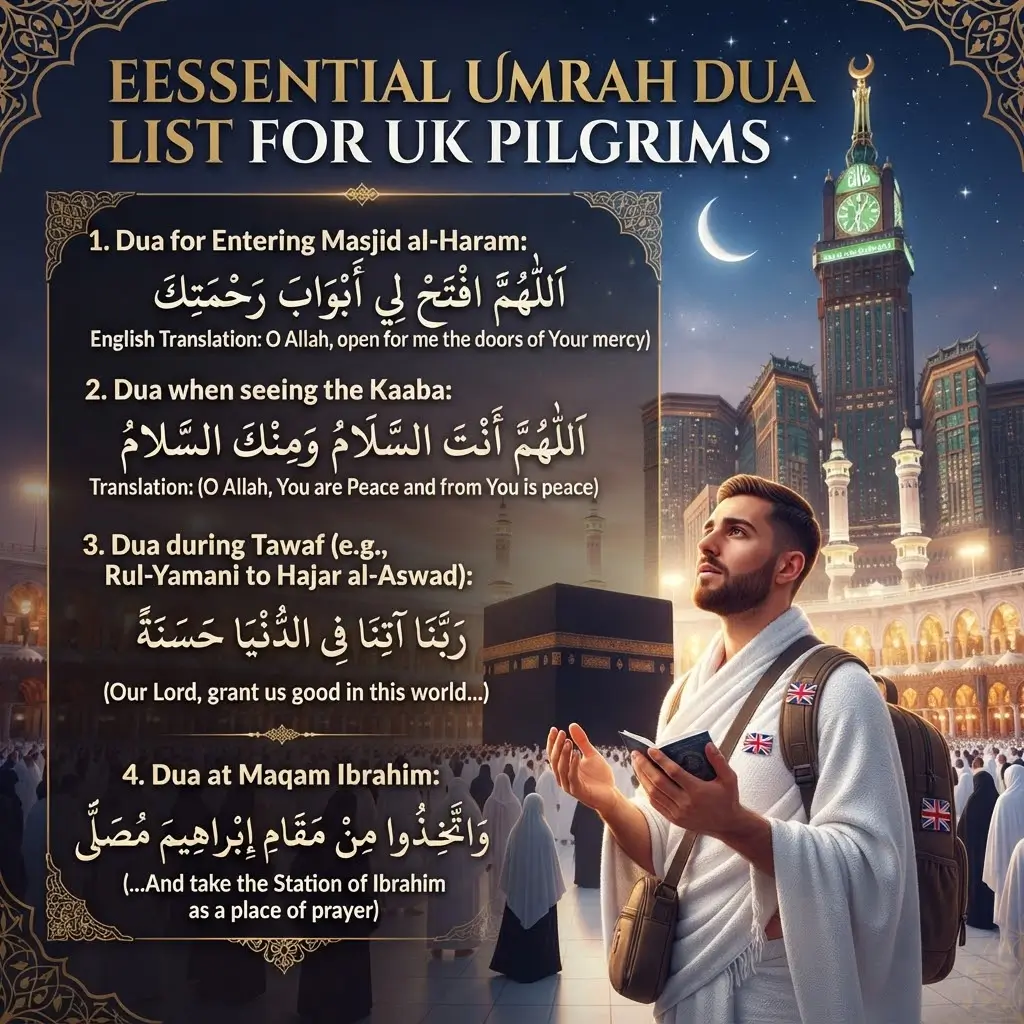
Umrah is as much a journey of the heart as it is a physical one. Knowing what to say at each step means you can focus on the moment itself, not on worrying whether you’re doing it right. Here’s a short, practical dua guide covering everything from leaving your front door in the UK to finishing your rituals in Makkah.
Before You Leave Home
Leaving the house:
Arabic: بِسْمِ اللَّهِ، تَوَكَّلْتُ عَلَى اللَّهِ، وَلَا حَوْلَ وَلَا قُوَّةَ إِلَّا بِاللَّهِ
Transliteration: Bismillah, tawakkaltu alallah, wa la hawla wa la quwwata illa billah.
Translation: “In the name of Allah, I place my trust in Allah. There is no power or strength except with Allah.”
Reference: Sunan Abu Dawud 5095
Arabic: سُبْحَانَ الَّذِي سَخَّرَ لَنَا هَذَا وَمَا كُنَّا لَهُ مُقْرِنِينَ وَإِنَّا إِلَى رَبِّنَا لَمُنْقَلِبُونَ
Transliteration: Subhana-lladhi sakhkhara lana hadha wa ma kunna lahu muqrineen, wa inna ila Rabbina lamunqaliboon.
Translation: “Glory is to Him Who has subjected this to us, and to our Lord we are returning.”
Reference: Quran 43:13-14
On your flight from the UK, the Miqat announcement usually comes about 1.5–2 hours before landing in Jeddah or Madinah. This is your cue to enter Ihram.
Arabic: لَبَّيْكَ اللَّهُمَّ عُمْرَةً
Transliteration: Labbayka Allahumma Umrah.
Translation: “Here I am, O Allah, for Umrah.”
Reference: Sahih al-Bukhari 1549
Talbiyah, recited from Ihram until you begin Tawaf:
Arabic: لَبَّيْكَ اللَّهُمَّ لَبَّيْكَ، لَبَّيْكَ لَا شَرِيكَ لَكَ لَبَّيْكَ، إِنَّ الْحَمْدَ وَالنِّعْمَةَ لَكَ وَالْمُلْكَ، لَا شَرِيكَ لَكَ
Transliteration: Labbayka Allahumma labbayk, labbayka la sharika laka labbayk, inna-l-hamda wa-n-ni’mata laka wa-l-mulk, la sharika lak.
Translation: “Here I am, O Allah, here I am. You have no partner. All praise, grace and sovereignty belong to You.”
Reference: Sahih al-Bukhari 1549
Note: Men say this aloud, women say it softly.
Step in with your right foot and say:
Arabic: اللَّهُمَّ افْتَحْ لِي أَبْوَابَ رَحْمَتِكَ
Transliteration: Allahumma-ftah li abwaba rahmatik.
Translation: “O Allah, open for me the doors of Your mercy.”
Reference: Sahih Muslim 713
There’s no fixed dua for this moment, just say “Allahu Akbar” and speak to Allah directly, in your own words, about whatever’s on your heart. Many scholars consider this a particularly powerful moment for personal dua.
You don’t need a different dua for each of the seven rounds, that’s a common misconception. What’s actually prescribed:
- Start each round at the Black Stone: Bismillah, Allahu Akbar
- Between the Yemeni Corner and Black Stone:
Arabic: رَبَّنَا آتِنَا فِي الدُّنْيَا حَسَنَةً وَفِي الآخِرَةِ حَسَنَةً وَقِنَا عَذَابَ النَّارِ
Transliteration: Rabbana atina fid-dunya hasanatan wa fil-akhirati hasanatan wa qina adhaban-nar.
Translation: “Our Lord, give us good in this world and good in the Hereafter, and protect us from the punishment of the Fire.”
Reference: Quran 2:201
Everywhere else, recite Quran, dhikr, or your own personal dua, in any language
Pray two rakah near Maqam Ibrahim if space allows, no fixed dua is required here. For Zamzam, drink while facing the Qiblah and recite:
Arabic: اللَّهُمَّ إِنِّي أَسْأَلُكَ عِلْمًا نَافِعًا، وَرِزْقًا وَاسِعًا، وَشِفَاءً مِنْ كُلِّ دَاءٍ
Transliteration: Allahumma inni as’aluka ilman nafi’an, wa rizqan wasi’an, wa shifa’an min kulli da’in.
Translation: “O Allah, I ask You for beneficial knowledge, abundant provision, and healing from every illness.”
Reference: Sunan Ibn Majah 3062
Starting at Safa:
Arabic: إِنَّ الصَّفَا وَالْمَرْوَةَ مِنْ شَعَائِرِ اللَّهِ
Transliteration: Inna-s-Safa wa-l-Marwata min sha’a’irillah.
Translation: “Indeed, Safa and Marwah are among the symbols of Allah.”
Reference: Quran 2:158
At each hill, you can recite:
Arabic: لَا إِلَهَ إِلَّا اللَّهُ وَحْدَهُ لَا شَرِيكَ لَهُ، لَهُ الْمُلْكُ وَلَهُ الْحَمْدُ وَهُوَ عَلَى كُلِّ شَيْءٍ قَدِيرٌ، لَا إِلَهَ إِلَّا اللَّهُ وَحْدَهُ، أَنْجَزَ وَعْدَهُ، وَنَصَرَ عَبْدَهُ، وَهَزَمَ الأَحْزَابَ وَحْدَهُ
Transliteration: La ilaha illallahu wahdahu la sharika lahu, lahu-l-mulku wa lahu-l-hamdu wa huwa ala kulli shay’in qadir. La ilaha illallahu wahdahu, anjaza wa’dahu, wa nasara abdahu, wa hazama-l-ahzaba wahdahu.
Translation: “There is no god but Allah alone, no partner. His is the kingdom, His is the praise, and He has power over all things. There is no god but Allah alone, He fulfilled His promise, gave victory to His servant, and defeated the confederates alone.”
Reference: Sahih Muslim 1218
Between the hills, any personal dua or dhikr is fine, many pilgrims use this stretch to pray for family back home.
After Sa’i, men shave or trim their hair, women trim a fingertip’s length:
Arabic: اللَّهُمَّ اغْفِرْ لِلْمُحَلِّقِينَ. اللَّهُمَّ اغْفِرْ لِلْمُحَلِّقِينَ. اللَّهُمَّ اغْفِرْ لِلْمُقَصِّرِينَ
Transliteration: Allahumma-ghfir lil-muhalliqeen. Allahumma-ghfir lil-muhalliqeen. Allahumma-ghfir lil-muqassireen.
Translation: “O Allah, forgive those who shave their heads. O Allah, forgive those who shave their heads. O Allah, forgive those who trim their hair.”
Reference: Sahih al-Bukhari 1727
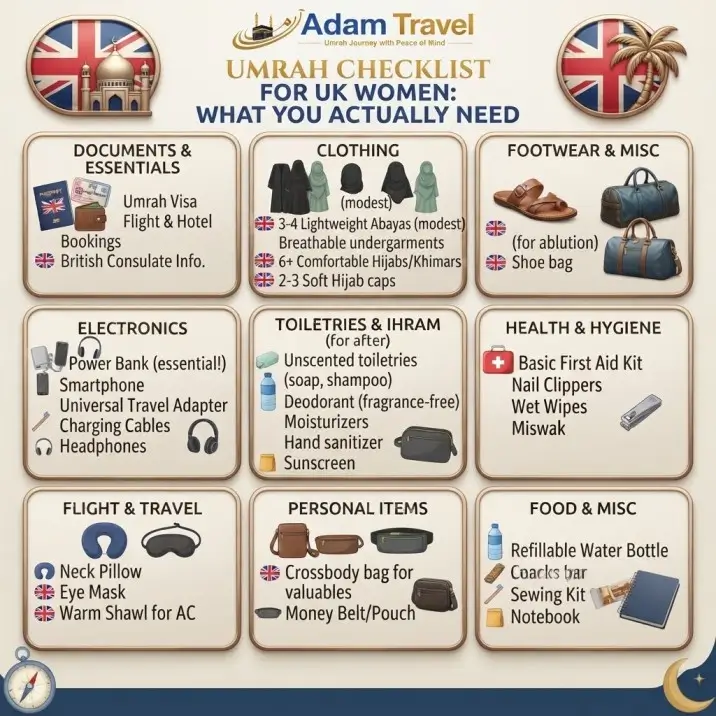
Quick Reference Table
Step | Arabic | Transliteration | Translation | Reference |
Leaving home | بِسْمِ اللَّهِ، تَوَكَّلْتُ عَلَى اللَّهِ | Bismillah, tawakkaltu alallah | Trust in Allah | Abu Dawud 5095 |
Ihram (Niyyah) | لَبَّيْكَ اللَّهُمَّ عُمْرَةً | Labbayka Allahumma Umrah | Here I am for Umrah | Bukhari 1549 |
Entering Masjid | اللَّهُمَّ افْتَحْ لِي أَبْوَابَ رَحْمَتِكَ | Allahumma-ftah li abwaba rahmatik | Open the doors of mercy | Muslim 713 |
Tawaf start | بِسْمِ اللَّهِ، اللَّهُ أَكْبَرُ | Bismillah, Allahu Akbar | In Allah’s name, Allah is Greatest | Bukhari 1613 |
Tawaf (Yemeni–Black Stone) | رَبَّنَا آتِنَا فِي الدُّنْيَا حَسَنَةً | Rabbana atina fid-dunya hasanatan | Good in this world and the next | Quran 2:201 |
Zamzam | اللَّهُمَّ إِنِّي أَسْأَلُكَ عِلْمًا نَافِعًا | Allahumma inni as’aluka ilman nafi’an | Knowledge, provision, cure | Ibn Majah 3062 |
Safa start | إِنَّ الصَّفَا وَالْمَرْوَةَ مِنْ شَعَائِرِ اللَّهِ | Inna-s-Safa wa-l-Marwata | Safa and Marwah are Allah’s symbols | Quran 2:158 |
Shaving/Trimming | اللَّهُمَّ اغْفِرْ لِلْمُحَلِّقِينَ | Allahumma-ghfir lil-muhalliqeen | Forgiveness for hair removal | Bukhari 1727 |
- Write your personal dua list before you fly, names of family, friends, anything on your heart
- Don’t stress about Arabic, Allah understands every language
- Keep your dua list on your phone or a printed card, don’t rely purely on memory during the rush of rituals
- Be patient in crowds. Every moment, even the hard parts, is still worship
Preparation is easier with the right support. Adam Travel has helped thousands of pilgrims from London, Manchester, Birmingham, and across the UK plan their Umrah with confidence, handling the logistics so you can focus on the spiritual side of the journey. If you’re ready to book, explore our Umrah Packages UK page or get in touch with our team directly.
FaQ's
Do I need to memorise every dua before I travel?
No. Keep a written or printed list with you, Allah hears sincere dua whether recited from memory or read aloud.
Is there a specific dua for each round of Tawaf?
No, this is a common misconception. Only the start of each round and the stretch between the Yemeni Corner and Black Stone have specific wording, the rest is open to personal dua.
Can I make dua in English instead of Arabic?
Yes. Sincerity matters more than language; Allah understands every tongue.
When is the best time to make personal dua during Umrah?
Common moments include first seeing the Kaaba, during Tawaf, and while drinking Zamzam, though personal dua is welcome at any point.

Verified Travel Specialist
Written By: Yasir Ali
Our content and package information are carefully reviewed by experienced Umrah travel specialists to ensure accuracy, reliability, and the latest updates.
Latest Updates
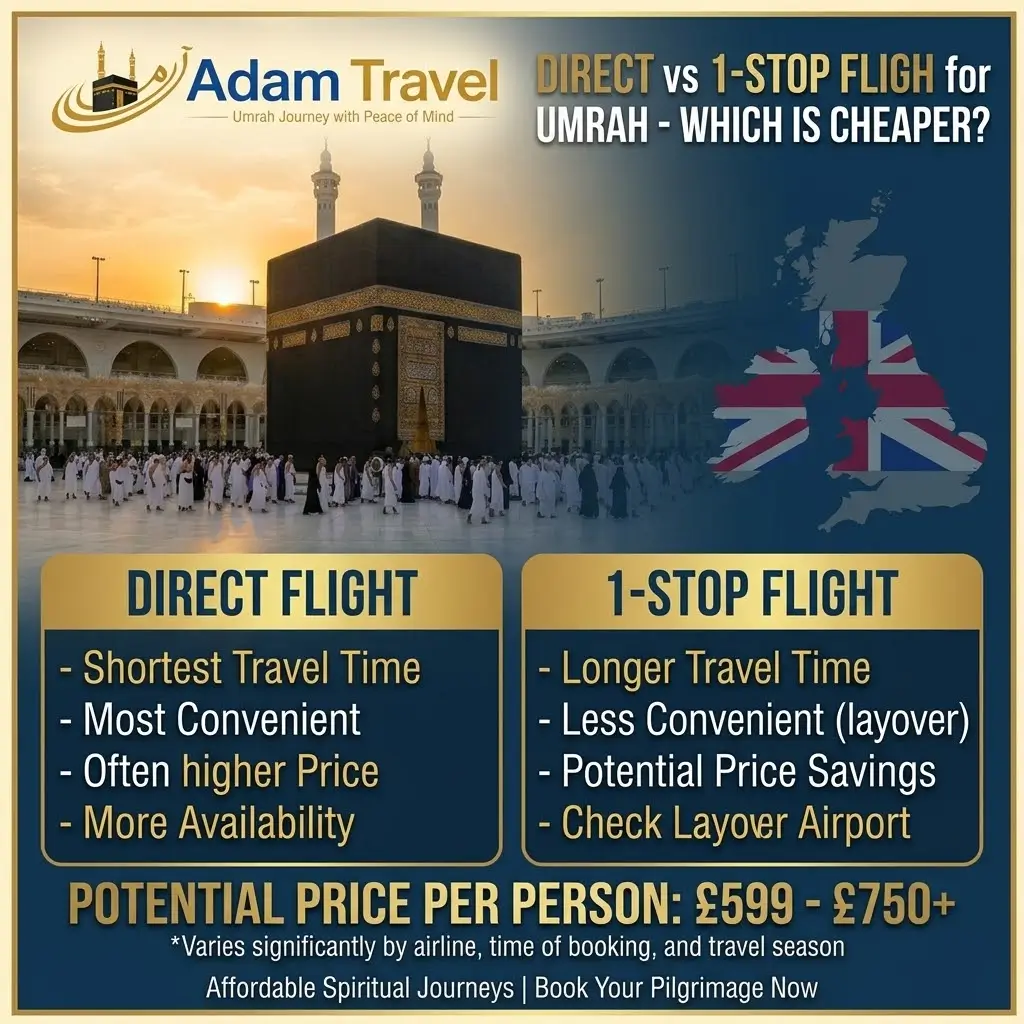
Direct vs 1-Stop Flights for Umrah – Which Is Cheaper
Direct vs 1-Stop Flights for Umrah – Which Is Cheaper Direct Flights vs. 1-Stop Flights
Essential Umrah Dua List for UK Pilgrims (Arabic + Translation)
Essential Umrah Dua List for UK Pilgrims (Arabic + Translation) Essential Umrah Dua List for
Umrah Checklist for UK Women: Complete Packing Guide
Umrah Checklist for UK Women: Complete Packing Guide Umrah Checklist for UK Women: What You